Streaming and Microphone Performance
Gaming Headset With Alexa: Noise-Proof Voice Control
9th Jan•9 min read
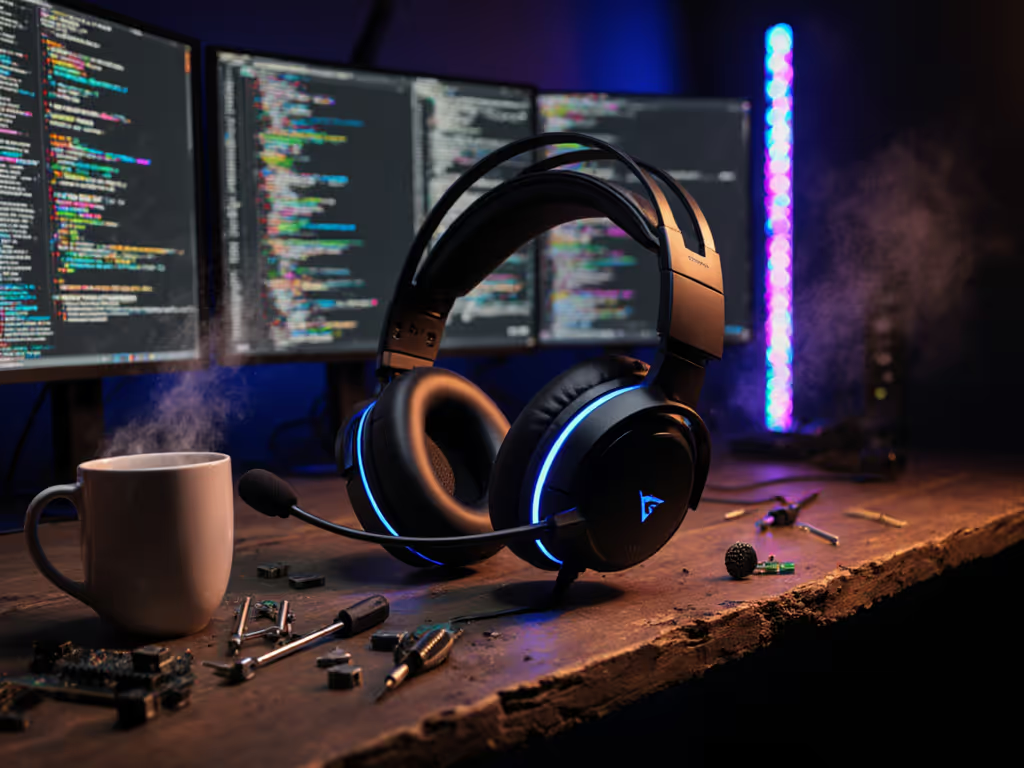
When you're hunting for a microphone headset gaming setup capable of handling simultaneous content creation, you're not just looking for good audio, you're looking for a tool that survives the grind. The appeal is clear: a simultaneous content creation headset lets you capture clean game audio and voice in parallel, ideal for streamers who double as commentators, or competitive players who need to clip gameplay while staying sharp in Discord.
But here's the hard truth most buyers miss: the best headset is the one you can keep alive.
I've watched countless headsets fail within a season because the cost math stopped after checkout. A cracked hinge, flattened pads, sticky yoke, these aren't freak failures. They're predictable wear patterns, and whether your headset survives them depends almost entirely on design choices made before you buy. A headset with replaceable parts and transparent warranty behavior will outlast and outvalue any premium-priced sealed design, season after season.
This guide walks you through the criteria that separate headsets built for durability from those built for discounts. We focus on failure-mode transparency, repairability, and the real cost you'll pay over years, not just the opening invoice.
Dual audio capture technology in gaming headsets typically means one of two setups:
The distinction matters for repairability. A headset with two fully independent mic elements doubles your failure points. If either mic fails, you lose a stream revenue source or your callout clarity. This is where transparency becomes critical: does the manufacturer offer mic replacement modules, or are you buying a new headset?
Check the technical documentation before purchase. If the spec sheet doesn't clearly describe the mic architecture or doesn't mention spare mic capsules availability, that's your first red flag. Manufacturers that hide this detail often hide it because the answer is "no, you can't replace it."
I once cracked my favorite headset mid-season right at the hinge. The manufacturer offered a discount code. I sourced a replacement yoke, swapped the ear cups and pads myself, and got another year of service out of it. That repair wasn't a hack, it was the result of a designer who built hinges to fail fixably.
This is where the hinge check becomes non-negotiable. Inspect the hinge mechanism:
Critical question: Can you buy a replacement yoke or hinge assembly, or are you buying a new headset? If the manufacturer doesn't offer spares, they've optimized for obsolescence, not durability.
Verify parts availability before purchase. Check the brand's support site or contact customer service directly. A two-minute email saves a $150 headset from becoming landfill. If you're planning for long-term use, our repair and modification guide shows how to replace yokes, pads, and mics safely.
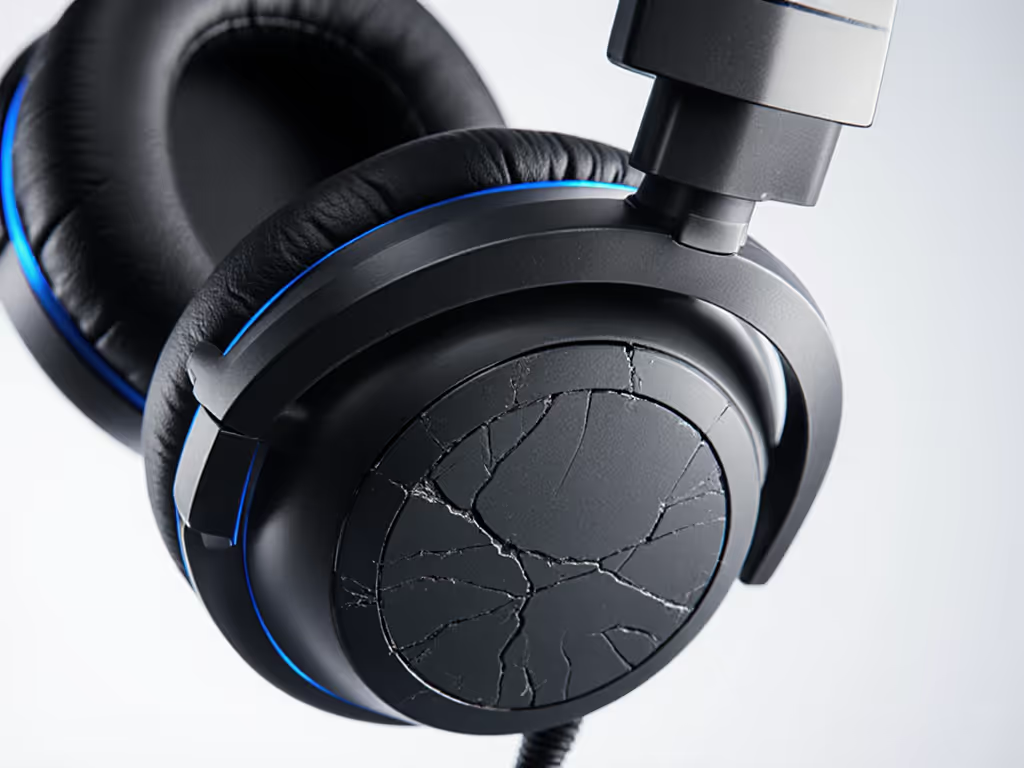
Ear pads fail. That's not a failure of your ownership, it's a fact of physics. After 6-9 months of daily wear, pressure, heat, and moisture, polyurethane pads flatten, crack, and lose acoustic seal. A $15 pad replacement extends the headset's life another season. Neglecting pad replacement forces you into a $200 headset buyout.
Examine pad attachment:
Asking the hard question: If you buy this headset today, can you order replacement pads in two years? Or will they be out of stock, discontinued, and unavailable?
Brands serious about longevity ship with extra pads or offer them dirt-cheap as consumables. Brands optimized for turnover make pads expensive or don't sell them at all.
Streaming headsets are judged by mic clarity, but the bar matters. Your voice should sound natural and full range, not boomy or thin, while background noise (keyboards, fans, roommates) stays subdued.
The key metric here is the noise gate threshold. Too aggressive, and it clips the start of your words or truncates quiet callouts. Too lenient, and your stream sounds like a landfill. A well-engineered dual-mic setup lets you tune the gate per use case: tight for ranked comms, loose for ambient capture during streaming.
Red flags:
Manual sidetone control (not just on/off, but volume adjustment) is a feature that predicts a thoughtful design. Brands that include it understand gaming workflows and fatigue reduction.
Before purchase, check if the headset allows you to save mic profiles on-device. If settings are cloud-only and require login, you risk losing configurations if the manufacturer shuts down their service or your account is flagged.
A headset that claims "low-latency" wireless might work perfectly in a demo booth and fail under interference in your home. For a deeper dive into latency trade-offs, see our 2.4GHz vs Bluetooth analysis. Real-world latency varies by environment, and manufacturers rarely disclose this variance.
When evaluating a streaming headset or gaming headset wireless performance:
One practical test: Can you charge the headset while using it wirelessly, or does charging kill the connection? This seems trivial, but it's a failure mode indicator. If the design can't handle simultaneous charging and use, the circuit design is fragile.
Warranty transparency reveals a manufacturer's confidence in longevity.
Analyze the warranty:
Buy once, fix twice, and play through the next season, but only if spare parts exist and cost rationally.
Contact the manufacturer before purchase with a simple question: "What spare parts do you stock, and what's the typical availability?" Their answer predicts your long-term experience.
Many reviews describe headsets as "light" or "comfortable," but this is vague. Over 4-8 hour sessions, specific pressure points cause fatigue: crown clamp, temple pressure (worse with glasses), ear heat, and yoke dig.
Look for objective comfort metrics:
Pain in a 30-minute demo doesn't scale linearly. If a headset is marginally uncomfortable in a store, it will be intolerable after 6 hours at home. Prioritize try-before-buy or retailers with generous return windows. For biomechanical insights and tested picks, read our deep comfort guide.
This is where buyer's remorse actually lives. Most buyers calculate cost as (Purchase Price) ÷ (Days Until Failure). That math is wrong.
Real total-cost-of-ownership accounts for:
Initial purchase: $X
Consumables per year:
Repair and replacement scenarios:
Multi-season projection:
Compare that to a sealed, non-serviceable headset:
The serviceable headset isn't just cheaper, it's less wasteful and more reliable.
Before checking out, map your repair costs. If the headset has no spare parts availability, assume year-2 failure and total cost doubles. If parts are stocked and cheap, you can plan 2-3 seasons per device. To compare brands that prioritize replaceable components, check our modular headsets value guide.
A dual-mic gaming headset worth your money isn't determined by hype, RGB lighting, or celebrity endorsements. It's determined by whether you can keep it alive when parts fail.
The final checklist:
The headset you should buy is the one that survives your next raid, your next shift, and your next season. That survival isn't luck, it's engineering that prioritizes repairability over disposability.
If a brand won't tell you where to buy spare parts or how long hinges typically last, they're optimizing for margin, not loyalty. Walk.
Buy once, fix twice, and play through the next season, but only if the machine is designed to let you.