Buying Guides and Ownership Essentials
Gaming Headset Calibration: Genre-Specific EQ Settings
7th Mar•10 min read
When you're shopping for a modular gaming headset buyer's guide that actually addresses real durability, you're not just evaluating audio quality; you are auditing hinges, yokes, pad mounts, and warranty transparency. The market in 2026 has finally shifted toward replaceable headset components, acknowledging what every long-term gamer knows: wear happens, and buying disposable headsets is a tax on frugality. This guide dissects how to identify modular designs that deliver long-term headset value and help you avoid the false economy of sealed, flashy models that crumble after a season or two.
The core insight is simple but often overlooked: long-term headset value isn't measured in unboxing videos or RGB novelty (it's measured in seasons). A headset with accessible pads, documented spare-part availability, and honest warranty terms lets you buy once, fix twice, and play through the next season. That principle reframes the entire buying conversation, shifting focus from initial cost to total-cost math over three to five years.
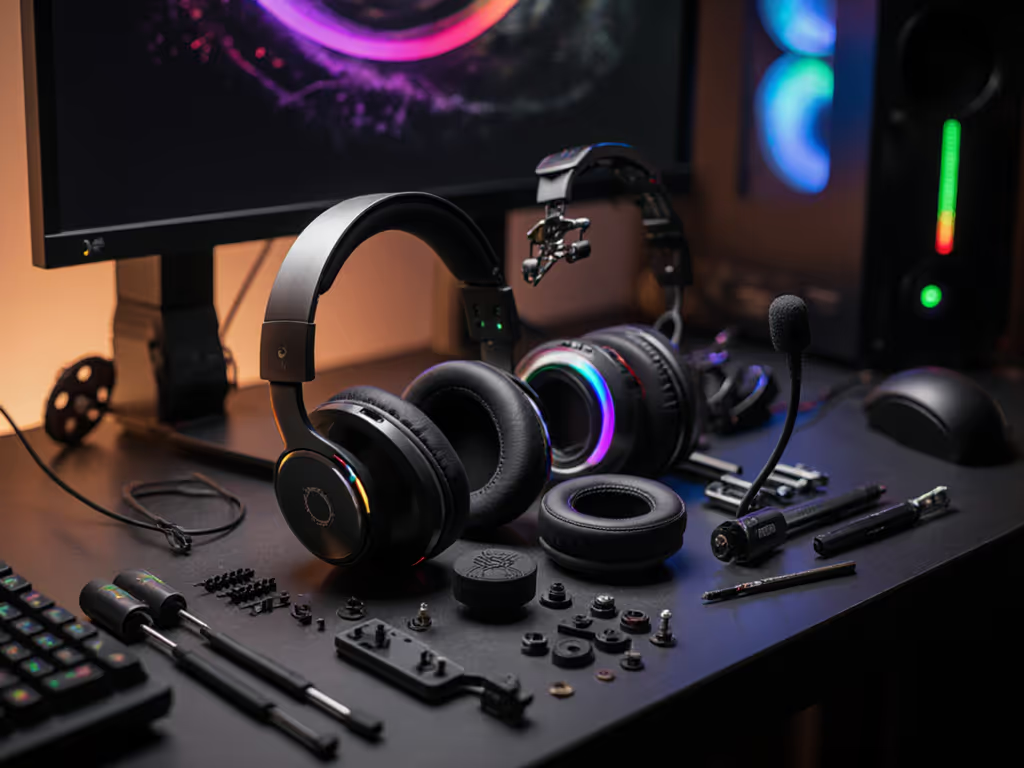
Modular gaming headsets are built with replaceable headset components as a first-class design goal, not an afterthought. This means earcups, headbands, yokes, cables, and microphones are engineered to detach, snap in, or screw together (allowing repair without binning the entire unit).
According to recent industry analysis, brands like Corsair and EPOS are leading this shift, recognizing that gaming communities (especially long-session esports players and streamers) demand gear that survives abuse and adapts as needs change. A modular hinge isn't just engineering; it's a compact promise that when the inevitable stress fracture appears, you're not buying a new headset, you're sourcing a $20 to $50 replacement yoke rather than committing another $150 to $300 to a sealed throwaway.
The economics matter. If a headset costs $180 and lasts one season before the hinge cracks (as happened to my once-favorite set), you're absorbing $180 in true annual cost. That same $180 headset, if modular, might run you an additional $40 for a replacement yoke every three to four years, stretching your per-year cost to roughly $50. That's not just a financial win; it's the difference between frustration and reliability.
Hinges and yokes are the mechanical weak link in any headset. They endure tension from head expansion during donning, sweat-induced corrosion, and the flex-fatigue cycles that accumulate across hundreds of wearing sessions. Most sealed-design headsets fail here first, and replacement is total loss.
When auditing a modular design, ask these diagnostic questions:
Designs with reinforced metal pivot points and screw-in yokes typically outlast snap hinges. Bonus: brands that sell yoke replacements as consumables understand they're running a long-term business, not chasing one-time sales. Warranty terms that explicitly cover hinge replacement (not just "defects") signal confidence in durability.
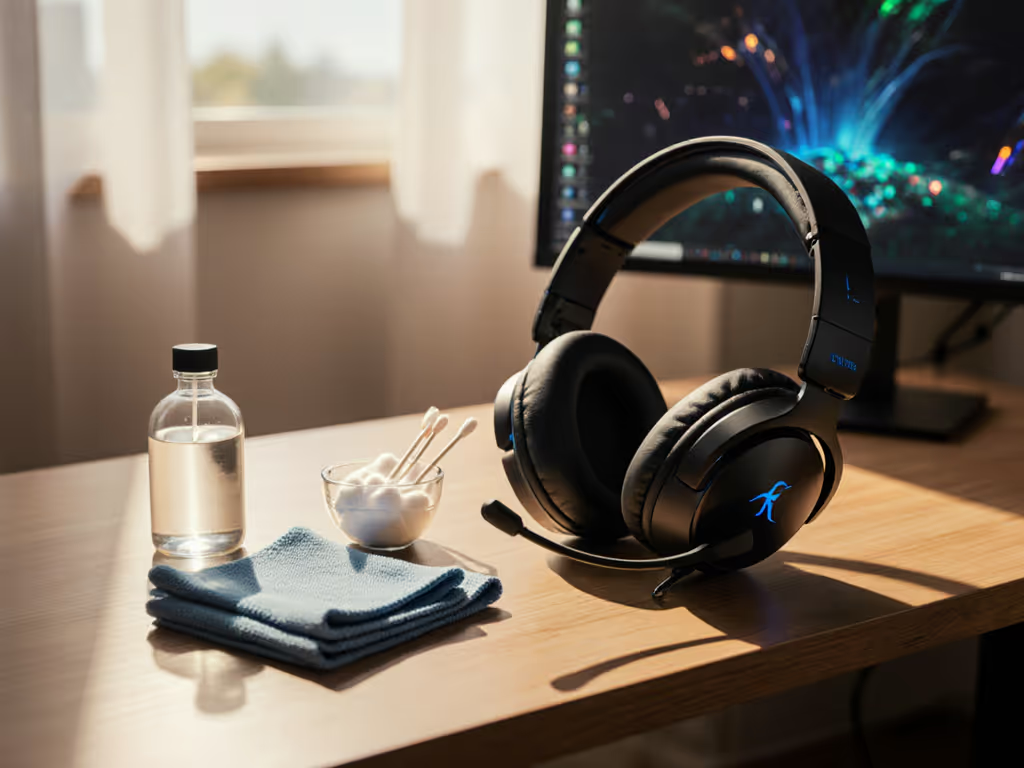
Eco-friendly gaming headset design starts with earcup accessibility. Pads flatten, tear, and accumulate sweat and dirt (they should be replaceable without tools or should require only a Phillips head).
Lead questions:
Brands like Corsair have earned goodwill by stocking replacement pads in multiple material profiles (leather, fabric, gel), letting you adapt a single headset to different seasons or preferences. A $15 pad swap beats a $180 purchase by every metric.
Limited cross-platform support doesn't just frustrate workflow (it accelerates failure). If a headset only pairs cleanly with PC but requires adapter judo on PlayStation or Xbox, you're handling the unit more, creating mechanical stress and increasing the chance of accidental drops or connector wear.
Modular value increases when a headset natively supports multiple protocols (2.4 GHz wireless, Bluetooth, USB wired) without dongles or firmware hiccups. If you need seamless platform switching, see our best dual-wireless headsets tested for simultaneous 2.4 GHz and Bluetooth. Search results confirm that leading models (including the Astro A50 X and ROG Delta II) offer simultaneous Bluetooth and 2.4 GHz wireless, allowing you to pair across platforms without unplugging and re-pairing, reducing mechanical fatigue on connectors.
A headset that needs fewer adapter swaps is a headset that outlasts cheaper single-platform alternatives. That's a hidden durability metric most reviews ignore.
Here's where modular headset cost analysis separates wishful thinking from reality. Create a five-year projection for three candidate headsets: a $70 budget sealed model, a $180 modular mid-range option, and a $300 premium modular design.
Scenario 1: Sealed Budget Headset
Scenario 2: Modular Mid-Range ($180, documented spare parts)
Scenario 3: Premium Modular ($300, best spare-parts ecosystem)
The modular mid-range model wins on total cost. But the real insight is consistency: years 2 to 5 are predictable because parts exist and are affordable. Sealed models gamble on early failure and force replace-everything decisions. For anyone valuing stability (especially creatives, remote workers, or esports players), modular design's cost transparency is worth the upfront dollar.
A great warranty is one backed by accessible spare parts and honest support. Generic "two-year limited warranties" mean nothing if the manufacturer won't confirm whether a hinge crack qualifies or if a yoke is stocked.
Red flags:
Green flags:
Brands that stand behind modularity make it easy to verify. If the spare-parts page is hidden or outdated, that's a signal the manufacturer doesn't expect long-term repairs, and you shouldn't expect long-term reliability.
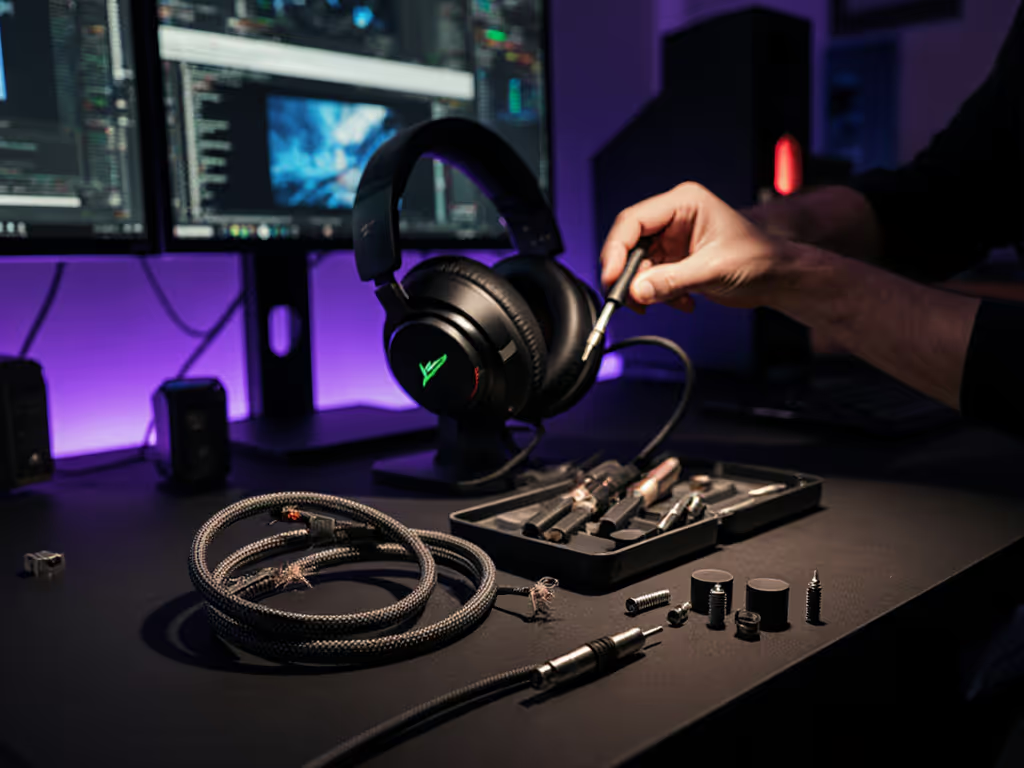
Wired connections fail less often than wireless, but cables corrode, connectors bend, and auxiliary cables (USB-C for charging, 3.5 mm for aux) are the first failure points. Modular design means the cable should be replaceable without soldering. For construction details and fixes, use our cable durability & repair guide.
Best practice: braided cables rated for 10,000+ bend cycles and connectors rated for 5,000+ insertions. If the spec sheet doesn't list cycle ratings, assume the cable is cheap and temporary. Stocking a replacement cable ($15 to $30) is far better than losing the whole headset to a cracked connector.
Modular design isn't just about parts (it's about access). If earcup replacement requires breaking the entire headband, comfort iterations are off the table. True modularity means you can swap to thicker padding, cooling gel pads, or larger earcups without engineering gymnastics. For all-day sessions, study the headset comfort biomechanics to dial in clamp, crown pressure, and materials that actually prevent fatigue.
Comfort breaks down across:
Microphones are often sealed into the boom or fixed to the headband. Modular designs let you swap to third-party capsules, boom angles, or noise-rejection profiles (critical if your in-game callouts are clipping or sound robotic).
Quality indicators:
A modular mic also means you can mute/unmute via a physical switch instead of relying on software, reducing the chance of firmware bugs silencing you mid-call.
Manufacturer specs are theater. Real durability and comfort insights come from multi-hour test labs, user repair forums, and warranty-claim data from support communities.
Key metrics to hunt:
If independent reviewers are consistently noting "hinge creaks after 6 months" or "pads flattened by month 3," that's the modular design failing (meaning parts need to be cheap and stocked). If reviews praise both durability and modularity, you've found a winner.
An eco-friendly gaming headset isn't one with a green paint job, it's one you don't throw away. If sustainability is a priority, compare picks in our eco gaming headsets guide. Every year a modular headset avoids the landfill is plastic and rare-earth minerals saved.
Companies publishing lifecycle impact reports, using recycled plastic in frames, or offering trade-in programs for old units deserve attention. More broadly, the practice of repairing and extending product life is the most direct environmental win. A headset with a five-year lifespan via modularity offsets the production carbon of five cheap sealed alternatives.
Based on documented spare-parts availability, warranty transparency, and real-world durability reports, modular contenders include models that offer truly accessible components and responsive support. The Corsair lineup, for instance, has earned reputation for stocking pads and cables; EPOS is similarly transparent. Mid-range models with dual-wireless (Bluetooth + 2.4 GHz) and documented yoke replacements score highest on total-cost math. Premium models command higher prices but often justify it through better materials and support responsiveness.
The pattern: modular designs aren't uniformly cheaper upfront, but they cost less to own and repair over time. A $180 to $250 headset with accessible parts and a responsive warranty beats a $70 sealed model or an unsupported $300 premium every time you factor in the second and third years.
The best headset is one you can keep alive. Modularity (replaceable pads, detachable booms, accessible yokes, documented spare parts, and transparent warranties) transforms a gaming peripheral from a consumable into a platform. When you audit candidates against these twelve factors, you're not just comparing specs; you're betting on longevity, and you're pricing out the true cost of ownership across multiple seasons.
Skip the hype about wireless latency shavings or new codec names. Instead, ask: Where are the spare parts? How fast is support? Can I replace the hinge without a soldering iron? If the answers are clear and reassuring, you've found a headset worth owning, not one you're renting until the next failure.